Loading Events

« All Events

Season Special: Kluxen – Marc-André Hamelin Plays Rachmaninoff’s Piano Concerto No. 3

7 February 2027 @ 2:30 pm

Canadian piano legend Marc-André Hamelin, hailed by The New York Times for his “near-superhuman technical prowess,” takes on the towering “Rach 3,” one of the most challenging concertos ever written. Christian Kluxen pairs it with Brahms’s heroic First Symphony, a work born of grief for Schumann yet resolved in radiant strength, affirming resilience through beauty.

Not included in subscription purchase discount but can be booked at the same time as a subscription package. Single tickets on sale starting July 21, 2026.

Christian Kluxen, conductor

Christian Kluxen is now in his tenth season as Music Director of the Victoria Symphony in Canada, following a five-year tenure as Chief Conductor of the Arctic Philharmonic in Norway.

Kluxen has been described in the press as “a dynamic, charismatic figure” who “forms the music with an impressive vertical power of emotion and a focus on the grand form”, conducting “with exemplary clarity and a heavenly warmth”. He is recognized for his sincere and transparent leadership, innovative programming, and his bold, imaginative, and energetic interpretations, showcased both in his MD and guest work.

 Alongside his many and varied commitments with the Victoria Symphony, recent and forthcoming guest engagements include Turku Philharmonic (where he was Principal Guest Conductor for three seasons) Orchestre de Chambre de Lausanne, Pacific Symphony, Oregon Symphony, Vancouver Symphony, Orchestre symphonique de Québec, Prague Radio Symphony Orchestra, Copenhagen Philharmonic, Odense Symphony, Aalborg Symphony and Norrköping Symphony. A fruitful and inspiring relationship with the Arctic Philharmonic, whom Kluxen led for five years as Chief Conductor, resulted in numerous exhilarating performances of a wide variety of repertoire, as well as several acclaimed recordings. 
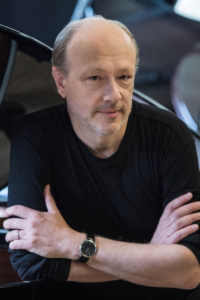
Marc-André Hamelin, piano

Pianist Marc-André Hamelin, a “performer of near-superhuman technical prowess” (The New York Times), is acclaimed worldwide for his rare combination of profound musicianship and dazzling technique. He is celebrated both for his interpretations of the core repertoire and for his fearless exploration of lesser-known works from the 19th, 20th, and 21st centuries. He regularly performs around the globe with the leading orchestras and conductors of our time, and gives recitals at major concert venues and festivals worldwide.

Hamelin’s 2025–2026 season spans North America, Europe, Asia, and Australia, with a dynamic mix of orchestral, recital, and chamber music engagements. He opens the season with a tour of Australia and Asia, featuring concerto and recital appearances with the Sydney Symphony under Sir Donald Runnicles, concerto engagements with the Wuxi, Ningbo, and Shenzhen symphonies, and solo recitals in Adelaide, Xiamen, and Shenzhen.

In North America, Hamelin appears with the Philadelphia Orchestra and Yannick Nézet-Séguin, the San Diego Symphony with Thomas Guggeis, the Los Angeles Chamber Orchestra, and with the Orpheus Chamber Orchestra, on tour. Recital highlights include Chicago Symphony Presents, San Francisco Symphony, Chamber Music Pittsburgh, Keyboard Concerts in Fresno, and Soka Performing Arts Center. In duo with Maria João Pires, he is presented by The Cleveland Orchestra, the Gilmore Piano Festival, and the Fortas Chamber Music Series at the Kennedy Center.

European appearances include Rhapsody in Blue with the Bayerisches Staatsorchester and Vladimir Jurowski, the Marx Piano Concerto with the Tonkünstler-Orchester Niederösterreich and Fabien Gabel, and performances with the Bremer Philharmoniker, Wigmore Hall, the Schubertiade, MDR Wartburg, and the Chipping Campden Festival. Additional recitals take place in Italy, the Netherlands, and Berlin, along with an extensive duo tour with Maria João Pires to the Philharmonie de Paris, the Barbican, The Hague, Martigny, Toulouse, and Berlin.

Chamber music highlights include the Chausson Concert with Augustin Hadelich and members of the Boston Symphony Orchestra, and the Franck Piano Quintet with the Juilliard String Quartet for the Philadelphia Chamber Music Society. With Canadian pianist Charles Richard-Hamelin, Hamelin tours to Koerner Hall in Toronto, Salle Bourgie in Montréal, Club musical de Québec, and the Isabel Bader Centre in Kingston.

An exclusive recording artist for Hyperion Records, Hamelin has released more than 90 albums to date, with notable recordings of a broad range of solo, orchestral, and chamber repertoire. In October 2025, Hyperion releases Found Objects / Sound Objects, a recording of contemporary works. Recent acclaimed recordings include Beethoven’s Hammerklavier Sonata, Op. 106, and Sonata in C major, Op. 2 No. 3, as well as the Dvořák and Florence Price quintets with the Takács Quartet.

Also a noted composer, Hamelin has written more than 30 works. Many, including his Études and Toccata on “L’homme armé”—commissioned by the Van Cliburn International Piano Competition—are published by Edition Peters. He performed the Toccata in 2023 on NPR’s Tiny Desk alongside works by C.P.E. Bach and William Bolcom. His most recent composition, Mazurka, was commissioned by the Library of Congress to celebrate 100 years of concerts and premiered in April 2024. Featuring nine original pieces, Hamelin’s 2024 album New Piano Works is a survey of some of his own recent works, exhibiting his formidable skill as a composer-pianist whose music imaginatively and virtuosically taps into his musical forebears. “His previous offerings of his own music were rich, but his latest self-portrait album is on another level,” wrote The New York Times. It was Hamelin’s first album of all original compositions since Études (2010).

Hamelin is the recipient of a Lifetime Achievement Award from the German Record Critics’ Association, and over 20 of its quarterly awards. Other honors include eight Juno Awards, 12 Grammy nominations, the 2018 Jean Gimbel Lane Prize from Northwestern University, and the Paul de Hueck and Norman Walford Career Achievement Award from the Ontario Arts Foundation. Hamelin is an Officer of the Order of Canada, a Chevalier de l’Ordre national du Québec, and a member of the Royal Society of Canada. Born in Montreal, Hamelin lives in the Boston area with his wife, Cathy Fuller, a producer and host at Classical WCRB.

Sergei Rachmaninoff (1873–1943)
Piano Concerto No. 3 in D minor, Op. 30
I. Allegro ma non tanto
II. Intermezzo
III. Finale

INTERMISSION

Johannes Brahms (1833–1897)
Symphony No. 1 in C minor, Op. 68
I. Un poco sostenuto; Allegro
II. Andante sostenuto
III. Un poco allegretto e grazioso
IV. Adagio; Più andante; Allegro non troppo, ma con brio

There is a perception, warranted or otherwise, that the orchestral canon is the musical equivalent of Mount Rushmore: enormous, unchanging, and carved out of one massive block of granitic genius. In truth, however, while geological metaphors might be useful in helping us to understand the enduring power of the true greats, but repertoire is always in flux. Entire bodies of work can be subsumed by the rubble of changing tastes or smashed by tectonic forces; others emerge as if by erosion from the neglect or misunderstandings of the past. And this happier fate might he the case with both of the works on this program: Johannes Brahms’s Symphony No. 1 in C minor and Sergei Rachmaninoff’s Piano Concerto No. 3 in D minor. Now acknowledged masterpieces, both were initially received with lukewarm praise or even outright hostility.

“Not a great nor memorable proclamation,” sniffed one critic after Rachmaninoff himself premiered the Piano Concerto No. 3 with the New York Symphony Society on November 28, 1909. It’s telling too, that Rachmaninoff only took to the bench after its dedicatee, Josef Hoffman, declined the honour, saying simply that it “wasn’t for” him. Brahms’s symphonic debut won a more favourable response, but conductor Hans von Bülow undercut its virtues by calling it “Beethoven’s Tenth”. The comparison is justified: when asked about his work’s similarity to Beethoven’s Symphony No.9 in D minor, an irritated Brahms snapped back “Any ass can see that.”

Its distinctiveness has grown over time, and as Victoria Symphony music director Christian Kluxen points out, “Both works need long-distance thinking.” He’s speaking specifically about how to negotiate their complexities on the stage, but those words also ring true when looking at their status in musical history.

“With Brahms’ First Symphony, I don’t really like the phrase ‘Beethoven’s Tenth’, because it makes Brahms sound like the next logical step in a history book, as if this symphony simply had to arrive after Beethoven,” Kluxen argues. “And what about all the other great symphonic music written between Beethoven 9 and Brahms 1? Brahms and others might have mentioned this in elated moments, but I don’t think it reflects anything real in the creative process that I see happening in this symphony.

“The fact that Brahms took so long to write it has something more personal to it,” he continues. “This was not a composer casually entering the symphonic tradition. He knew exactly what he was up against (and it was not just Beethoven), and he could not accept anything half-finished from himself. He had already tested it through, for example, the Serenades, and Clara Schumann was certainly part of that creative process around him. With Brahms, I find it difficult to separate the technical, artistic, and emotional sides completely. Clara and Robert Schumann are present in his life and work in so many ways—sometimes openly, sometimes underneath. The horn call in the finale, which Brahms sent to Clara, is one of those moments where the personal and the musical seem very close. How much that shaped the actual composition is impossible to measure, but it belongs to the world of the piece. Again, Clara was certainly part of the process. But what kind of influence she had on him, I’m not sure. It might simply have put more pressure on him than what was fair.”

Rachmaninoff, who supported his compositional activities by touring as a piano virtuoso, certainly supplies more than ample pressure on both soloist and orchestra in the Piano Concerto No. 3. As Kluxen aptly points out, it is “one of the great mountains” of piano literature—and not an easy work to come to terms with for conductors, either.

“The difficulty is not simply ‘accompanying’ the soloist,” he says. “These concertos are so symphonically written that the orchestra is not just a background. Rachmaninov clearly wants a close interplay between piano and orchestra. That is also the danger. The piano can disappear inside the dense texture that is meant to support it. So the task is not only to make the orchestra play softer, but to make the score transparent enough that the pianist’s lines and direction can be heard. Sometimes it is balance, sometimes timing, sometimes knowing which orchestral voices must come through and which must get out of the way. And sometimes the conductor can’t even hear the piano. A colleague once told me that, in desperate situations, he would lean his back against the piano, so that when he could not hear it, he could at least feel the vibrations. How very Beethovenesque! I have not tried that yet, but perhaps it is a good emergency plan. But let us be honest: the pianist has the hardest job. The conductor’s job is to make sure that all the effort is not lost.”

Both the Brahms and the Rachmaninoff “deal with the pressure of making a large form feel necessary,” Kluxen adds. “In Rachmaninoff, the soloist almost has to sing through this huge orchestral world. In Brahms, you feel a composer trying to make his first symphonic statement with absolute depth. In both pieces there is virtuosity, but the real point is not display. It is architecture, control, and the ability to make something difficult feel inevitable.”

What is also inevitable is that the Victoria audience is going to be treated to magnificent performances. Kluxen’s lengthy immersion in the symphonic works of Brahms and his mentor Schumann has already resulted in stellar iterations of the former’s Symphony No. 3 in F major and German Requiem, among other gems, and when it comes to Rachmaninoff, Marc-André Hamelin has literally written the book. It’s his fingerings that are used in the publisher G. Henle’s definitive edition of the Russian master’s compositions for piano. With both works, we are in the best of all possible hands.

Notes by Alex Varty

Details

  • Date: 7 February 2027
  • Time:
    starts at 2:30 pm
  • Event Category:

Venue

  • Farquhar at UVic
  • University Farquhar Auditorium, Ring Road
    Victoria, BC V8P 5C2 Canada
    + Google Map
  • Phone 250.721.8480

Concert Programme

  • Rachmaninoff
    Piano Concerto No. 3 in D minor
  • Brahms
    Symphony No. 1 in C minor

Supporters

Victoria Symphony respectfully acknowledges and offers gratitude to the lək̓ʷəŋən people, known today as the Songhees and Xwsepsum Nations, whose unceded lands we live, work, and perform on. We honour their stewardship, care, and leadership — past, present, and future.