Loading Events

« All Events

Tausk – Bach’s Mass in B minor

21 March 2027 @ 2:30 pm

Bach’s Mass in B minor stands as one of the greatest summations of his genius. Vancouver Symphony Orchestra Music Director Otto Tausk leads the VS, Vancouver Chamber Choir, and five exceptional soloists in a sweeping tapestry of spiritual awe and luminous choral writing. Sacred or secular in resonance, the Mass invites listeners into a profound meditation on hope, beauty, and transcendence.

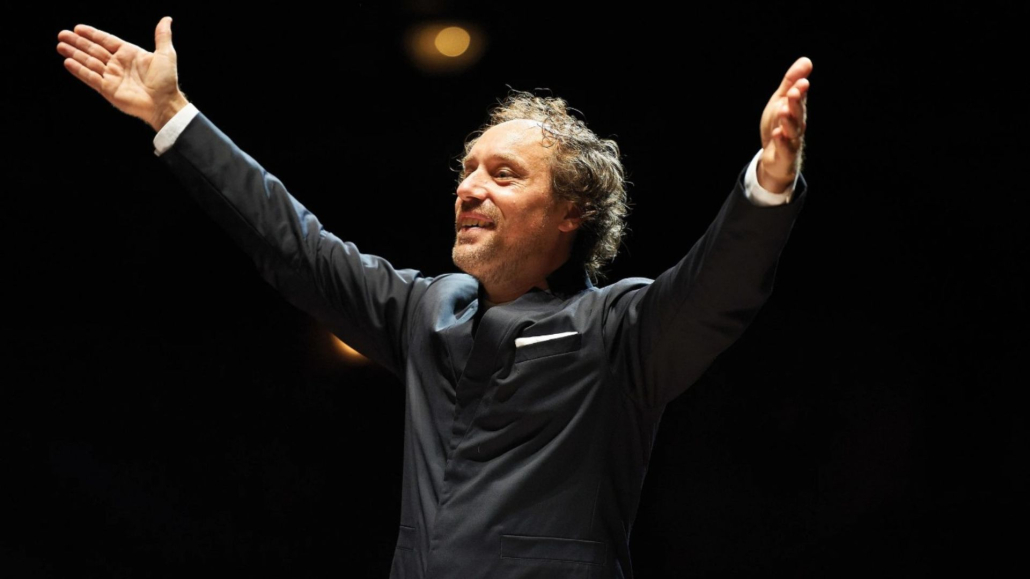
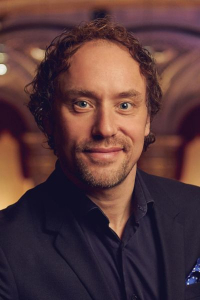
Otto Tausk, conductor

Internationally recognized for his dynamic musicianship and insightful interpretations, Dutch conductor Otto Tausk has worked with leading orchestras and opera houses worldwide, conducting repertoire ranging from core symphonic works to contemporary compositions. He is Music Director of the Vancouver Symphony Orchestra and Artistic Advisor to the VSO School of Music, collaborating with soloists such as Yo-Yo Ma, Renée Fleming, Itzhak Perlman, Daniil Trifonov, Gidon Kremer, James Ehnes, Anne-Sophie Mutter, Hilary Hahn, Khatia Buniatishvili, and Hélène Grimaud. 

Recent and upcoming engagements include debuts with the Taipei Symphony Orchestra, Buffalo Philharmonic, Edmonton Symphony Orchestra, Hong Kong Arts Festival, Belgian National Orchestra at the Klara Festival, and NDR Philharmonie Hannover, along with returns to the Residentie Orkest, Philharmonie Südwestfalen, West Australia Symphony Orchestra, OSPA Oviedo, Deutsche Staatsphilharmonie Rheinland-Pfalz, Tasmanian Symphony Orchestra, Danish National Symphony Orchestra, and Staatskapelle Weimar. 

Tausk has also guest-conducted the Royal Concertgebouw Orchestra, Los Angeles Philharmonic, New Jersey Symphony, San Diego Symphony, Rotterdam Philharmonic, Orquesta Sinfónica de Galicia, Orchestra Sinfonica di Milano Giuseppe Verdi, Stuttgart Philharmoniker, and several UK orchestras, including BBC Scottish Symphony and BBC National Orchestra of Wales, with whom he performed Ein Heldenleben at the 2018 BBC Proms. 

Highlights include the 2023/24 tour of Thomas Adès’ Powder Her Face with the Reisopera and the world premiere of Het Pand der Goden by Johannes Helstone with the Royal Concertgebouw Orchestra. Tausk’s recordings include works with the Royal Concertgebouw Orchestra, BBC Scottish Symphony, Danish National Symphony, and Norwegian Radio Orchestra, with awards including Classica France’s Choc du Mois and BBC Music Magazine Concerto Disc of the Month. 

Born in Utrecht, Tausk studied violin and conducting and served as Assistant Conductor to Valery Gergiev at the Rotterdam Philharmonic. He received the De Olifant prize for his leadership at Holland Symfonia. 
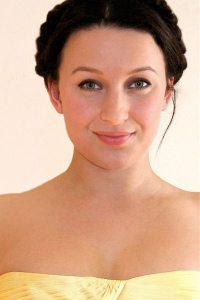
Yulia Van Doren, soprano

Soprano Yulia Van Doren is celebrated for her distinctive artistry and dedication to unusual repertoire, particularly in Baroque music. She has performed with leading North American orchestras and festivals, is the only singer to receive top prizes in all U.S. Bach vocal competitions and appears on two GRAMMY-nominated Boston Early Music Festival recordings. 

Her diverse career includes the world premiere of Shostakovich’s Orango with the Los Angeles Philharmonic, the revival of Monsigny’s Le roi et le fermier at Opera de Versailles and the Kennedy Center with Opera Lafayette, Monteverdi concerts in Venice with Sir John Eliot Gardiner, and Alessandro Scarlatti’s Tigrane at Opera de Nice. Other highlights include Handel’s Acis and Galatea with Radio Kamer Filharmonie and Akademie für Alte Musik Berlin in Macau, world premieres at Carnegie Hall, and performances with Dawn Upshaw at the Cartagena International Music Festival. 

A frequent collaborator with choreographer Mark Morris, Van Doren also performed at Africa’s Essaouira World Music Festival with Hassan Hakmoun. Born in Moscow and raised in the United States, she studied at the New England Conservatory and Bard College Conservatory, supported by Soros and Beebe Fellowships. She is also an author and founder of a holistic wellness brand. 
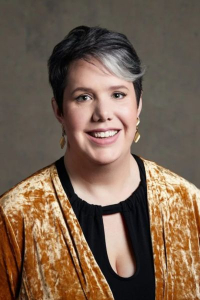
Danielle Reutter-Harrah, soprano

American soprano Danielle Reutter-Harrah earned her Bachelor of Music from the University of Denver’s Lamont School of Music and her Master of Music from the San Francisco Conservatory of Music. Known for her “youthful and light timbre” (Classical Voice North America) and “compassionate calm and warm, glowing tone” (Boston Globe), she is a sought-after performer of Baroque, classical, and contemporary repertoire. 

She has appeared with the Boston Early Music Festival, American Bach Soloists, Seattle Symphony, Early Music Vancouver, California Bach Choir, Alabama Symphony, and more. She is a founding member of the duo Jarring Sounds, releasing a self-titled album in 2012, and appears on a 2015 recording of Haydn’s Nelson Mass with the Stanford Chorale. 

Notable roles include the Sorceress in Purcell’s Dido and Aeneas, Melanto in Monteverdi’s Ulisse, and Ruggiero in Handel’s Alcina. She has performed in J.S. Bach’s St. Matthew Passion and Magnificat with leading ensembles across North America. She currently freelances in Seattle and resides in Edmonds, Washington. 

Sara Couden, alto

Praised for her “unusually rich and resonant voice” (Opera News), Contralto Sara Couden is a sought-after interpreter of opera, concert, and song repertoire. 

In 2024, her engagements include Baba the Turk with Lakes Area Music Festival and her San Francisco Opera debut as Rita in The Handmaid’s Tale (also covering Serena Joy). Concert appearances feature Beethoven’s Symphony No. 9 with Seattle Symphony, Mass in B Minor with Santa Cruz Symphony, Duruflé’s Requiem with Berkeley Community Chorus and Orchestra, and art songs with Jenny Lin and Philip Setzer at the Manchester Music Festival. 

Recent seasons saw Couden as Ottavia in L’incoronazione di Poppea, Catiscià in Il Ducato, and Osmiro in Olimpia vendicata, as well as alto soloist in Mozart’s Requiem, Alma Mahler’s Five Songs, and Messiah with major U.S. orchestras. She has debuted at the Metropolitan Opera, San Francisco Symphony, and Philharmonia Baroque Orchestra, toured Japan with Masaaki Suzuki, and completed the Lindemann Young Artist Program at the Met. Couden holds an MM in Opera from San Francisco Conservatory and an AD from Yale Institute of Sacred Music.  
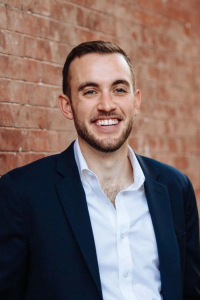
James Reese, tenor

Tenor James Reese sings with a voice The Washington Post calls “bright, agile, and full of heart.” Acclaimed for his emotional immediacy in repertoire from Bach to contemporary music, he has quickly established himself as a compelling soloist and ensemble singer. 

In 2025–26, Reese performed Messiah with the Kansas City and Baltimore orchestras, St. Thomas Fifth Avenue (NYC), and the Apollo Chorus of Chicago; gave recitals with soprano Maya Kherani at Opera Lafayette; celebrated Bach with Tafelmusik alongside Myriam LeBlanc; and presented recitals with lutenist Brandon Acker. He also recorded and premiered Gregory W. Brown’s Rural Hours with the Apple Hill String Quartet. 

A noted interpreter of early music, he has been praised as “splendid” (San Francisco Chronicle) and “captivating” (Broad Street Review). An advocate for new music, Reese has premiered works by Daron Hagen, Gregory W. Brown, Reena Esmail, and James Primosch, and performs with leading ensembles including Tenebrae, Blue Heron, Seraphic Fire, and The Crossing, with whom he won a GRAMMY. Reese holds degrees from Northwestern University and Yale School of Music. 
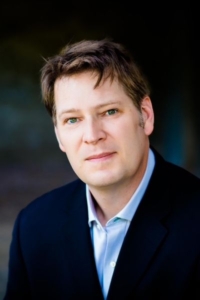
Sumner Thompson, baritone

Sumner Thompson is widely regarded as one of the finest interpreters of concert repertoire of his generation, and performs repertoire ranging from medieval to modern, with special emphasis on the musics of J.S. Bach, Benjamin Britten, and Claudio Monteverdi.

He has appeared in North and South America, Europe, and Asia with the Orchestra of St. Luke’s, Tafelmusik, the Handel & Haydn Society, Blue Heron, Gli Angeli Geneve, L’Harmonie des Saisons, the Boston Early Music Festival, Theatre of Voices, the Hague Philharmonic, the symphonies of Charlotte, Victoria, Memphis, and Indianapolis, Bach Collegium San Diego, Pacific Baroque Orchestra, Boston Baroque, Rosa Barocca, and the Portland Baroque Orchestra, among many others.

On the operatic stage he has appeared as Dr. Caius in Vaughan Williams’ “Sir John in Love” with Odyssey Opera, The Count in “Le Nozze di Figaro” with the Commonwealth Opera, the title role in Monteverdi’s “L’Orfeo” with Contemporary Opera Denmark, and as El Dancairo in “Carmen” with the Cincinnati Opera.

As a bassist and vocalist he has appeared on many projects including the album “In Motian” by avant-garde jazz bassist Andrew Dow, “Dhara” by Evren Ozan, and “Poesia” with Ghost Circle.

He also appears regularly with Singularity, a musicians collective dedicated to the art of improvised live music.

He is also an avid instrument builder, specializing in electric bass guitars.
Vancouver Chamber Choir

Artistic Director Kari Turunen began leading the Vancouver Chamber Choir — Canada’s longest-running professional choir — in September 2019, its 49th concert season.

Jon Washburn founded the choir in 1971 and it has become an amazing success story, ranking with the handful of North America’s best professional choruses and noted for its diverse repertoire and performing excellence. The choir has presented concerts to audiences at home in Vancouver and on tour across Canada. International excursions have taken the them to the USA, Mexico, Japan, China, Hong Kong, Taiwan, South Korea, Finland, France, Germany, the Czech Republic, Russia, Estonia, Latvia, Lithuania and Ukraine.

Honoured with the Margaret Hillis Award for Choral Excellence by Chorus America, the choir has performed countless concerts and broadcasts, released 36 recordings and received numerous awards. Foremost supporters of Canadian music, they are responsible for commissions and premieres of 334 choral works by 145 composers and arrangers, most of whom are Canadian. Over the years the choir has sung over 4,000 performances of works by Canadian composers, in addition to their extensive international repertoire.

The choir’s award-winning educational programs include the Conductors’ Symposium for advanced choral conductors, Interplay interactive workshops for choral composers, Focus professional development program for student singers, OnSite visitations for school choirs, the biennial Young Composers’ Competition, and many on-tour workshops and residencies.

Johann Sebastian Bach (1685—1750)
Mass in B Minor, BWV 232

I. Missa
1. Kyrie eleison
2. Christe eleison
3. Kyrie eleison
4. Gloria in excelsis Deo
5. Et in terra pax
6. Laudamus te
7. Gratias agimus tibi
8. Domine Deus
9. Qui tollis peccata mundi
10. Qui sedes ad dexteram Patris
11. Quoniam tu solus sanctus
12. Cum Sancto Spiritu
II. Symbolum Nicenum (Credo)
13. Credo in unum Deum
14. Patrem omnipotentem
15. Et in unum Dominum
16. Et incarnatus est
17. Crucifixus
18. Et resurrexit
19. Et in Spiritum Sanctum
20. Confiteor unum baptisma
21. Et expecto resurrectionem
III. Sanctus
22. Sanctus
IV. Osanna, Benedictus, Agnus Dei, Dona nobis pacem
23. Osanna in excelsis
24. Benedictus
25. Agnus Dei
26. Dona nobis pacem

Otto Tausk does not mince words when discussing Johann Sebastian Bach’s Mass in B minor. For the Vancouver Symphony Orchestra’s music director, it is simply “the best piece existing”.

Tausk is not alone in this belief. The 19th-century composer and critic Hans Georg Nägeli deemed it “the greatest musical work of all times and all people”. More recently, Australian music educator Graham Abbott has called it “truly one of the pieces of music I could not live without”. Although revealed in parts over the years, the nearly two-hour-long mass was not performed in its entirely during Bach’s lifetime, and in fact only made it to the stage in 1859, more than a century after his death. Nonetheless it was considered a masterpiece by contemporaries such as Georg Frederick Handel, who treasured a copy of the score, and it has only gained in repute in the ensuing centuries. (An interesting footnote is that London, England’s illustrious and enduring Bach Choir was formed in 1876, expressly to present the Mass in B Minor’s British premiere.)

For Tausk, who will be joined along with soloists Yulia Van Doren, Danielle Reuter-Harrah, Sara Couden, James Reese, and Sumner Thompson in this Victoria Symphony spectacle, there’s good reason for that. “I think Bach is the greatest inspiration for lots of composers, and for lots of people that love music,” he says. “Of course before and after Bach phenomenal music has been written, but somehow there’s always this connection to Bach. And from looking at Bach’s repertoire, I think that the B-minor Mass is the summary of his work. I’m not exact on the date when he wrote it, but it was near the end of his life; he wrote it over many years, and he kind of put everything into it.

“The composition—the technique—is phenomenal, and at the same time so is the emotional effect it has on the listener,” the conductor adds. “So for me, I don’t think there’s a piece that sums up Bach more than this one.”

Many musicologists consider the Mass in B minor the epitome of “parody” in music, a designation that might possibly confuse today’s lay listeners. In contemporary parlance, the term suggests a degree of mockery, or perhaps even a feeling of superiority towards the musical material being referenced. In pop-music terms, one thinks of the Rutles’ loving but also cynical appropriation of various tropes from the Beatles’ catalogue. Historically, however, “parody” simply signifies a compositional approach that mines the past for fresh expression, another field in which Bach excelled.

One might even argue that the Mass in B minor is not only the distillation of Bach’s own masterpieces, but of all the European composers who preceded him.

“Yes!” enthuses Tausk. “It has all these different style, doesn’t it? There’s the Baroque style, but there’s also Italian, French, German… I mean the counterpoint is amazing, but also the dancing, which is the French element, and then you have the Italian aria. So it’s all those styles together, not just of his own work but also things that are inspired by the Renaissance. It’s everything together, somehow.”

This does not mean that Bach’s sonic anthologizing is a kind of pastiche. “It does feel like a whole,” Tausk asserts. “Sit and listen to the entire thing, and when it’s done you want to sing it and play it and hear it again. It’s just one of those incredibly gorgeous pieces that never bores. It just keeps on being interesting and challenging—and it doesn’t matter how well you know it. You just keep finding new things.

“The music teaches me a lot about polyphony, and it teaches me a lot about Baroque virtuosity,” adds Tausk, who began his career in music as a violinist. “If you start looking at how the music is written, you discover all these incredibly clever devices. It’s almost perfect the way it’s put together, but if you listen to the music that doesn’t bother you. And if you have that as a standard—if you understand the craft of writing music but at the same time you do not bother your listener with how well it’s written—then you can just present beautiful music.”

A lesson, he argues, that has not lost any contemporary currency. At the time of our interview the Utrecht-born Tausk was in Brussels, conducting the premiere of the late Luc Brewaeys’ Symphony No. 8 with the Belgian National Orchestra. “It has that same incredible craft of instrumentation and use of motifs,” he comments. “It’s completely different music: for instance, it has all this playing with overtones and playing with the whole spectrum of sound, but it’s done in a very skillful way. But if you listen to it for the first time, or for the 10th time or for the 16th time, you just hear beautiful music. And it’s music that inspires you and that grabs you by the throat—music that just moves you. And I always like it when music is, on one hand incredibly well put together, but also when you don’t need to know that. You can also just enjoy beautiful music.

“That, I think, is something that Bach has taught us,” Tausk concludes. “If you think about all of his fugues and all his counterpoint and all the craft of how he wrote all those things, it must have been very difficult to do what he did and to do it in a good way, where it all makes sense. But you can also hear Bach’s music being played on an accordion when you ride your bicycle past the Rijksmuseum in Amsterdam, and it still sounds amazing.”

Notes by Alex Varty

Details

  • Date: 21 March 2027
  • Time:
    starts at 2:30 pm

Venue

Concert Programme

  • Bach
    Mass in B minor

Supporters

Victoria Symphony respectfully acknowledges and offers gratitude to the lək̓ʷəŋən people, known today as the Songhees and Xwsepsum Nations, whose unceded lands we live, work, and perform on. We honour their stewardship, care, and leadership — past, present, and future.