Quand viendra la saison nouvelle,
When the new season comes,
Quand auront disparu les froids,
When the cold has gone,
Tous les deux nous irons, ma belle,
We two will go, my sweet,
Pour cueillir le muguet aux bois;
To gather lilies-of-the-valley in the woods;
Sous nos pieds égrenant les perles
Scattering as we tread the pearls of dew
Que l’on voit au matin trembler,
We see quivering each morn,
Nous irons écouter les merles
We’ll go and hear the blackbirds
Siffler!
Sing!
Le printemps est venu, ma belle;
Spring has come, my sweet;
C’est le mois des amants béni,
It is the season lovers bless,
Et l’oiseau, satinant son aile,
And the birds, preening their wings,
Dit ses vers au rebord du nid.
Sing songs from the edge of their nests.
Oh! viens donc sur ce banc de mousse,
Ah! Come, then, to this mossy bank
Pour parler de nos beaux amours,
To talk of our beautiful love,
Et dis-moi de ta voix si douce:
And tell me in your gentle voice:
Toujours!
Forever!
Loin, bien loin, égarant nos courses,
Far, far away we’ll stray from our path,
Faisons fuir le lapin caché,
Startling the rabbit from his hiding-place
Et le daim au miroir des sources
And the deer reflected in the spring,
Admirant son grand bois penché;
Admiring his great lowered antlers;
Puis, chez nous, tout heureux, tout aises,
Then home we’ll go, serene and at ease,
En paniers enlaçant nos doigts,
And entwining our fingers basket-like,
Revenons rapportant des fraises
We’ll bring back home wild
Des bois!
Strawberries!
II. Le spectre de la rose (The Ghost of the Rose)
Soulève ta paupière close
Open your eyelids,
Qu’effleure un songe virginal;
Brushed by a virginal dream;
Je suis le spectre d’une rose
I am the spectre of a rose
Que tu portais hier au bal.
That yesterday you wore at the dance.
Tu me pris encore emperlée
You plucked me still sprinkled
Des pleurs d’argent de l’arrosoir,
With silver tears of dew,
Et parmi la fête étoilée
And amid the glittering feast
Tu me promenas tout le soir.
You wore me all evening long.
Ô toi, qui de ma mort fus cause,
O you who brought about my death,
Sans que tu puisses le chasser,
You shall be powerless to banish me:
Toutes les nuits mon spectre rose
The rosy spectre which every night
À ton chevet viendra danser.
Will come to dance at your bedside.
Mais ne crains rien, je ne réclame
But be not afraid – I demand
Ni messe ni _De profundis_;
Neither Mass nor De Profundis;
Ce léger parfum est mon âme,
This faint perfume is my soul,
Et j’arrive du paradis.
And I come from Paradise.
Mon destin fut digne d’envie:
My destiny was worthy of envy;
Et pour avoir un sort si beau,
And for such a beautiful fate,
Plus d’un aurait donné sa vie,
Many would have given their lives –
Car sur ton sein j’ai mon tombeau,
For my tomb is on your breast,
Et sur l’albâtre où je repose
And on the alabaster where I lie,
Un poète avec un baiser
A poet with a kiss
Écrivit: Ci-gît une rose
Has written: Here lies a rose
Que tous les rois vont jalouser.
Which every king will envy.
III. Sur les lagunes (On the Lagoons)
Ma belle amie est morte:
My dearest love is dead:
Je pleurerai toujours;
I shall weep for evermore;
Sous la tombe elle emporte
To the tomb she takes with her
Mon âme et mes amours.
My soul and all my love.
Dans le ciel, sans m’attendre,
Without waiting for me
Elle s’en retourna;
She has returned to Heaven;
L’ange qui l’emmena
The angel who took her away
Ne voulut pas me prendre.
Did not wish to take me.
Que mon sort est amer!
How bitter is my fate!
Ah! sans amour, s’en aller sur la mer!
Alas! to set sail loveless across the sea!
La blanche créature
The pure white being
Est couchée au cercueil.
Lies in her coffin.
Comme dans la nature
How everything in nature
Tout me paraît en deuil!
Seems to mourn!
La colombe oubliée
The forsaken dove
Pleure et songe à l’absent;
Weeps, dreaming of its absent mate;
Mon âme pleure et sent
My soul weeps and feels
Qu’elle est dépareillée.
Itself adrift.
Que mon sort est amer!
How bitter is my fate!
Ah! sans amour, s’en aller sur la mer!
Alas! to set sail loveless across the sea!
Sur moi la nuit immense
The immense night above me
S’étend comme un linceul;
Is spread like a shroud;
Je chante ma romance
I sing my song
Que le ciel entend seul.
Which heaven alone can hear.
Ah! comme elle était belle,
Ah! how beautiful she was,
Et comme je l’amais!
And how I loved her!
Je n’aimerai jamais
I shall never love a woman
Une femme autant qu’elle.
As I loved her.
Que mon sort est amer!
How bitter is my fate!
Ah! sans amour, s’en aller sur la mer!
Alas! to set sail loveless across the sea!
IV. Absence
Reviens, reviens, ma bien-aimée;
Return, return, my sweetest love!
Comme une fleur loin du soleil,
Like a flower far from the sun,
La fleur de ma vie est fermée
The flower of my life is closed
Loin de ton sourire vermeil!
Far from your crimson smile!
Entre nos cœurs quelle distance!
Such a distance between our hearts!
Tant d’espace entre nos baisers!
So great a gulf between our kisses!
Ô sort amer! ô dure absence!
O bitter fate! O harsh absence!
Ô grands désirs inapaisés!
O great unassuaged desires!
Reviens, reviens, ma bien-aimée.
Return, return, my sweetest love!
Comme une fleur loin du soleil,
Like a flower far from the sun,
La fleur de ma vie est fermée
The flower of my life is closed
Loin de ton sourire vermeil!
Far from your crimson smile!
D’ici là-bas, que de campagnes,
So many intervening plains,
Que de villes et de hameaux,
So many towns and hamlets,
Que de vallons et de montagnes,
So many valleys and mountains
À lasser le pied des chevaux.
To weary the horses’ hooves.
Reviens, reviens, ma bien-aimée.
Return, return, my sweetest love!
Comme une fleur loin du soleil,
Like a flower far from the sun,
La fleur de ma vie est fermée
The flower of my life is closed
Loin de ton sourire vermeil!
Far from your crimson smile!
V. Au cimetière (At the Cemetery)
Connaissez-vous la blanche tombe
Do you know the white tomb,
Où flotte avec un son plaintif
Where the shadow of a yew
L’ombre d’un if?
Waves plaintively?
Sur l’if, une pâle colombe,
On that yew a pale dove,
Triste et seule, au soleil couchant,
Sad and solitary at sundown
Chante son chant;
Sings its song;
Un air maladivement tendre,
A melody of morbid sweetness,
À la fois charmant et fatal,
Delightful and deathly at once,
Qui vous fait mal
Which wounds you
Et qu’on voudrait toujours entendre,
And which you’d like to hear forever,
Un air, comme en soupire aux cieux
A melody, such as in the heavens,
L’ange amoureux.
A lovesick angel sighs.
On dirait que l’âme éveillée
As if the awakened soul
Pleure sous terre à l’unisson
Weeps beneath the earth together
De la chanson,
With the song,
Et du malheur d’être oubliée
And at the sorrow of being forgotten
Se plaint dans un roucoulement
Murmurs its complaint
Bien doucement.
Most meltingly.
Sur les ailes de la musique
On the wings of music
On sent lentement revenir
You sense the slow return
Un souvenir;
Of a memory;
Une ombre, une forme angélique
A shadow, an angelic form
Passe dans un rayon tremblant,
Passes in a shimmering beam,
En voile blanc.
Veiled in white.
Les belles-de-nuit, demi-closes,
The Marvels of Peru, half-closed,
Jettent leur parfum faible et doux
Shed their fragrance sweet and faint
Autour de vous,
About you,
Et le fantôme aux molles poses
And the phantom with its languid gestures
Murmure, en vous tendant les bras:
Murmurs, reaching out to you:
Tu reviendras?
Will you return?
Oh! jamais plus, près de la tombe
Ah! nevermore shall I approach that tomb,
Je n’irai quand descend le soir
When evening descends
Au manteau noir,
In its black cloak,
Écouter la pâle colombe
To listen to the pale dove
Chanter sur la pointe de l’if
From the top of a yew
Son chant plaintif!
Sing its plaintive song!
VI. L’île inconnue (The Unknown Island)
Dites, la jeune belle,
Tell me, pretty young maid,
Où voulez-vous aller?
Where is it you would go?
La voile ouvre son aile,
The sail is billowing,
La brise va souffler!
The breeze about to blow!
L’aviron est d’ivoire,
The oar is of ivory,
Le pavillon de moire,
The pennant of watered silk,
Le gouvernail d’or fin;
The rudder of finest gold;
J’ai pour lest une orange,
For ballast I’ve an orange,
Pour voile une aile d’ange,
For sail an angel’s wing,
Pour mousse un séraphin.
For cabin-boy a seraph.
Dites, la jeune belle,
Tell me, pretty young maid,
Où voulez-vous aller?
Where is it you would go?
La voile ouvre son aile,
The sail is billowing,
La brise va souffler!
The breeze about to blow!
Est-ce dans la Baltique
Perhaps the Baltic,
Dans la mer Pacifique,
Or the Pacific
Dans l’île de Java?
Or the Isle of Java?
Ou bien est-ce en Norvège,
Or else to Norway,
Cueillir la fleur de neige
To pluck the snow flower
Ou la fleur d’Angsoka?
Or the flower of Angsoka?
Dites, la jeune belle,
Tell me, pretty young maid,
Où voulez-vous aller?
Where is it you would go?
Menez-moi, dit la belle,
Take me, said the pretty maid,
À la rive fidèle
To the shore of faithfulness
Où l’on aime toujours.
Where love endures forever.
– Cette rive, ma chère,
– That shore, my sweet,
On ne la connaît guère
Is scare known
Au pays des amours.
In the realm of love.
Où voulez-vous aller?
Where is it you would go?
La brise va souffler.
The breeze is about to blow!


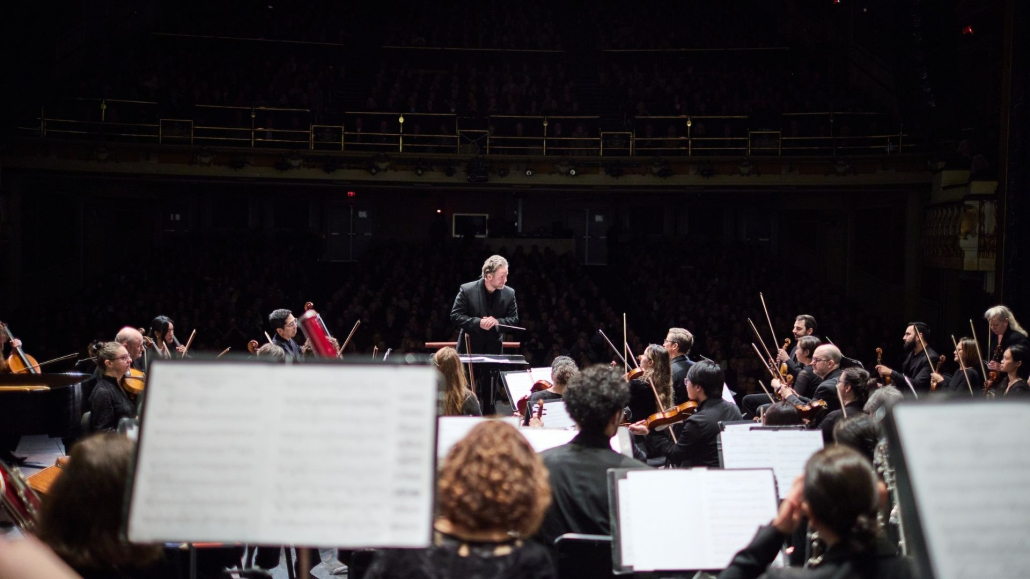
 Christian Kluxen, conductor