
Finding What Resonates: Matthew White on Art, Community, and the Power of Live Music
by Rebecca Marchand
As CEO of the Victoria Symphony, Matthew White carries the responsibilities that come with leading one of Canada’s most respected orchestras: supporting musicians and staff, balancing financial discipline with artistic ambition, navigating long-term planning alongside day-to-day operational demands, and advocating for the role of the arts in a changing world.
But spend even a short amount of time with him and the title quickly becomes only part of the story. What comes through just as strongly is curiosity, humour, warmth, and an enduring belief in what music can do.
“I think our role is, in some small way, to remind people of what makes them human,” he says. Then he laughs. “Which is a fairly ambitious brief when you put it like that.”
The humour is characteristic, but so is the conviction behind it. While his role has changed over the years, the impulse underneath it has not.
A Singer’s Life
Long before he became CEO of the Victoria Symphony, Matt spent two decades building an international career as one of Canada’s leading Baroque vocalists, performing with orchestras and ensembles across North America and Europe.
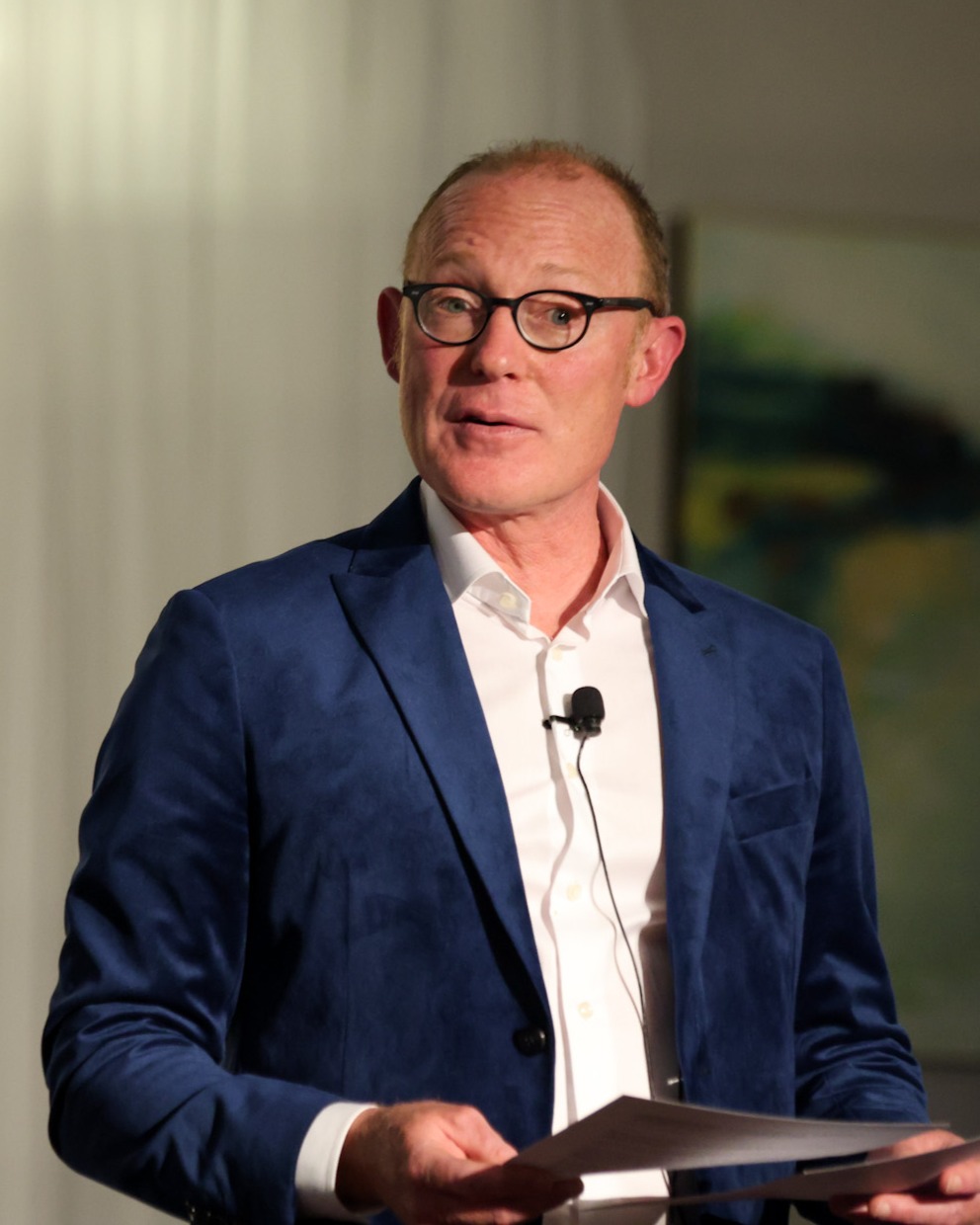
The work demanded precision, vulnerability, and a life lived largely on the road. Music was not simply his career; it was the centre of his life.
“One of the things I loved about singing,” he says, “was that when it was working, it gave me a way to release emotion through breath.”
At its best, performing offered a kind of connection that went beyond ordinary conversation. From the outside, it could look glamorous. From the inside, it was also physically and emotionally demanding, especially with a young family at home.
“The realities of being a travelling singer — being away from home for eight months of the year, always under pressure — started to feel less romantic and more logistically complicated,” he says.
Then came an injury that forced a difficult transition. After developing a severe chest infection during an exceptionally busy Christmas season, Matt continued performing — something he says many musicians are guilty of doing. The illness caused lingering damage to his vocal cords. Although his voice improved, it never fully returned to where it had been.
“What made it hard,” he says, “was that it happened just as I felt I had developed a deeper artistic understanding of what I wanted to communicate. I finally knew what I wanted to do, but my body couldn’t quite respond in the same way.”
The loss was not only professional. Singing had shaped his identity, his daily life, and the way he connected with other people.
“If I’m honest, I still miss it,” he says. “It’s a quiet ache that shows up briefly almost every day — like a polite but persistent houseguest.”
Still, he is quick to say that working in arts leadership has brought its own deep rewards.
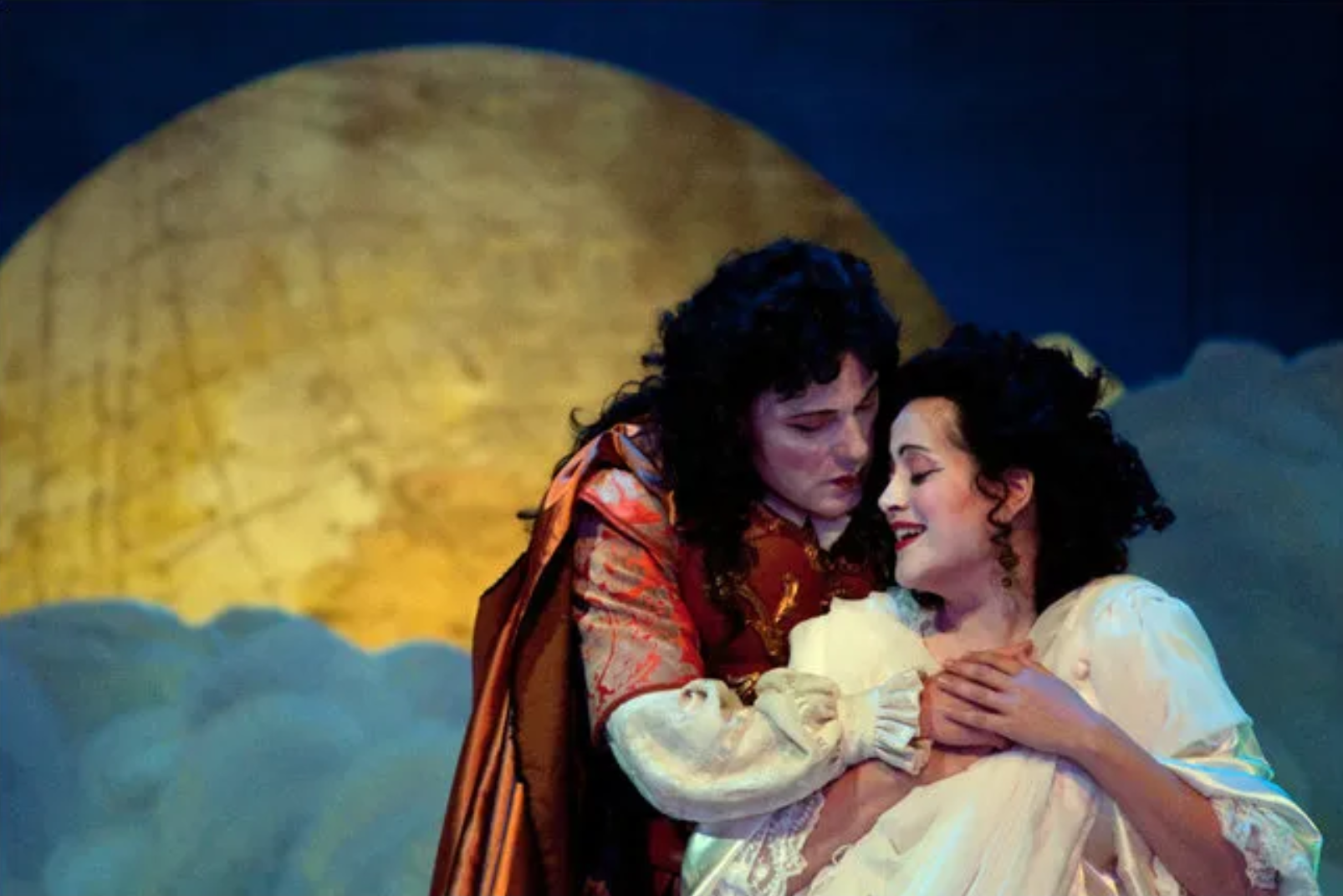
Matthew and soprano Amanda Forsythe in Niobe, Regina di Tebe at the Boston Early Music Festival in 2011.
“There have been many times, sitting in the hall, tired or occasionally a bit fed up, when the music starts and I’m reminded exactly why it’s all worth it. Helping to bring something beautiful into the world still carries a deep satisfaction. It’s a different kind of reward, but no less meaningful.”
Then, after a beat, he adds: “Arts administration is also considerably less dependent on one’s sinuses.”
Finding a Different Way Forward
Like many people facing an unexpected career transition, Matt briefly considered a few alternate futures. One of them involved craft beer.
“I briefly considered going to brewing school in Davis, California,” he says. “The craft beer scene was booming, and I fancied myself a pretty good homebrewer.”
Fortunately for the Victoria Symphony, someone intervened.
“A very sensible friend gently but firmly redirected me,” he recalls. “She pointed out that I was already in my early forties and might want to build on the skills I already had. She also suggested I stick to just drinking beer, but only on weekends, which struck me as balanced advice.”
Around that same time, longtime colleague Stephen Stubbs was launching Pacific MusicWorks in Seattle and needed help building the organization. Matt quickly discovered that many of the instincts he had developed as a performer translated naturally into administrative leadership.
Artists spend years learning how to collaborate, solve problems under pressure, communicate clearly, and hold both the practical and emotional dimensions of a performance at once. Administration, it turned out, was not entirely different.
“I think Stephen liked the idea of working with someone who understood both the artistic and practical sides,” Matt says. “Also, I do love a good spreadsheet, but only as a means to an end. The art always has to come first.”
That balance between artistic understanding and practical leadership eventually led him to Early Music Vancouver, where he spent eight years as Executive and Artistic Director. It was a formative chapter that allowed him to deepen both his artistic vision and his understanding of what it takes to sustain an arts organization over time.
He speaks warmly about the mentors and colleagues who shaped him during that period, particularly José Verstappen, the longtime leader of Early Music Vancouver.
“I think he recognized that for an organization to thrive, it helps to have leadership that understands the art deeply,” Matt says, “while also appreciating the less glamorous but absolutely essential work behind the scenes.”
Arriving in Victoria
By the time the opportunity at the Victoria Symphony emerged, Matt already knew the organization well. He had previously performed with the orchestra in Pacific Opera Victoria productions, including Giulio Cesare and Rodelinda, and had long admired the calibre of musicianship he encountered here.
“It was clear to me even then that this was a disproportionately excellent ensemble for a city of this size,” he says.
He and his family had already relocated to Victoria, thanks in part, he jokes, to “Vancouver housing prices, which are a powerful motivator.”

Nearly six years into his tenure as CEO, Matt speaks about the Victoria Symphony with a mixture of pride and gratitude.
“The artistic growth of the orchestra, led by Christian and Sean, combined with the commitment of the staff and board and the support of our community, has been remarkable,” he says.
He is quick to recognize that the organization’s progress belongs to many people: musicians, staff, volunteers, donors, board members, and audiences. That sense of shared purpose is central to how he thinks about leadership. The goal is not simply to run an efficient organization, but to create the conditions in which artistic excellence and human connection can flourish together.
That culture became especially important during the uncertainty of the pandemic.
Holding the Line During the Pandemic
When Matt talks about the Symphony’s virtual seasons, there is clear pride in his voice. He describes that period as one of the most difficult chapters of his life, but also one in which the organization accomplished something extraordinary.
“To produce work at that level, in that much uncertainty, and with such strong results, was no small thing,” he says.
At the time, arts organizations around the world were grappling with questions of survival, relevance, and connection. The Victoria Symphony responded by creating ambitious digital performances that kept audiences engaged and musicians working. Matt believes that period played a major role in the organization’s strong rebound.
“The quality of what we were producing stood up alongside anything in North America,” he says.
The experience also reinforced something he already believed: that orchestras are not luxuries. They are part of the civic and emotional life of a community. They help people gather, listen, feel, remember, and imagine.
Building What Comes Next
If there is one issue Matt speaks about with particular urgency these days, it is the future of the Victoria Symphony and one of the most significant barriers to its continued development: the lack of reliable, long-term access to an appropriate rehearsal venue.
Despite the Symphony’s recent period of growth, the organization still does not have a rehearsal home of its own.
“Every week of our season involves negotiating access to multiple venues,” Matt explains. “Often we rehearse in one or two different locations before moving again for the concert itself.”
For an orchestra, acoustics and consistency are not luxuries. They are essential artistic tools. Musicians need to hear one another clearly. Conductors need to shape sound in a space that supports the work. Staff need predictable access for production, storage, scheduling, and planning. Constant movement between spaces creates logistical and artistic challenges that most audiences never see.
“And thankfully never hear,” Matt adds.
For an orchestra of the Victoria Symphony’s size and quality, the situation is unusual. It is also increasingly limiting. The organization has grown artistically and institutionally, but its infrastructure has not kept pace.
Still, Matt remains hopeful.
“We are actively working on solutions, and I’m optimistic about where we’ll land,” he says. “The community has helped build something exceptional here. We have a first-rate symphony in this city, and it needs and deserves a proper space in which to work.”
The issue is not about a building for its own sake. It is about giving the orchestra the conditions it needs to keep serving the community at the highest level. It is about protecting the artistic progress that has been made and ensuring that the next chapter of the Victoria Symphony is not constrained by avoidable barriers.
What Music Can Do
At the heart of Matt’s philosophy is a simple belief: art matters because people matter.
“It’s not just about the objective beauty of the music,” he says. “It’s about how it resonates inside you.”
Music creates connection. Connection builds community. And community, especially now, is something worth protecting.
That may be what Matt has spent his career working toward, whether as a singer, artistic director, or CEO. The stage may no longer be where he stands, but the impulse that first drew him to music has not changed. He still believes people need places where beauty, emotion, and connection are taken seriously.
“I hope the music unlocks something in our audiences,” he says. “That it helps them feel more connected, maybe even a little more whole. I realize that might sound a bit out there, but it’s honestly how I feel.”
For Matt, that is the work. Not only presenting concerts but helping to sustain one of the rare public spaces where people can gather around something larger than themselves.
And for the Victoria Symphony, that work is still very much unfinished.
Continuing to be so proud of Matt, all staff all musicians all donors that make the Symphony in Victoria an important and extraordinary experience in so many ways for so many people. Keep up the excellent work. Happy to have been part of this journey.