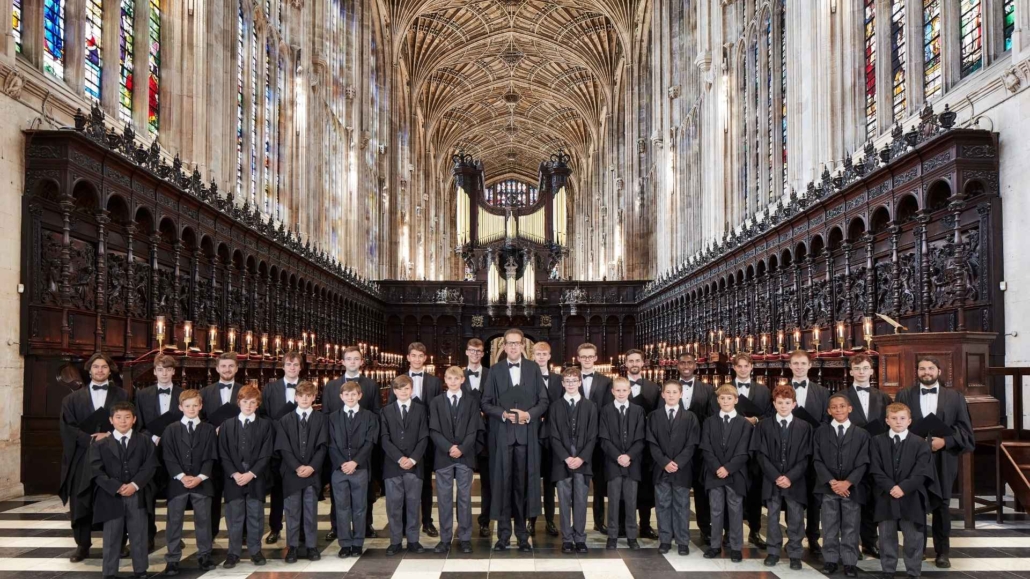
 Daniel Hyde, music director
Daniel Hyde has been Director of Music at King’s College, Cambridge since 2019. As well as directing the world-famous choir in daily services, he regularly conducts concerts and broadcasts at home and abroad. Born in the UK, schooled as a chorister at Durham Cathedral, he was made a Fellow of the Royal College of Organists at the age of 17 and won the organ scholarship to King’s College, Cambridge; upon graduation he took up the position of Director of Music at Jesus College, Cambridge. In 2009, he became Informator Choristarum at Magdalen College, Oxford, where he was also an Associate Professor. In 2016 Daniel became Organist and Director of Music at Saint Thomas Church, Fifth Avenue, New York City. In September 2024 he became Musical Director of City of London Choir, alongside his commitments at King’s.
As a conductor, Daniel has worked with many of the world’s leading ensembles including the BBC Singers, The Tallis Scholars, the London Bach Choir, Britten Sinfonia, Philharmonia Chorus, Philharmonia Orchestra, BBC Concert Orchestra, Royal Philharmonic Orchestra, the Orchestra of the Age of Enlightenment, the Orchestra of St Luke’s and New York Baroque Incorporated.
As an organist, he has performed throughout the world. Regular appearances include at the BBC Proms including his solo debut performing Bach’s Canonic Variations at the organ of the Royal Albert Hall in 2010. In 2021 he was concerto soloist at the First Night of the Proms. As an ensemble player he has appeared extensively with the likes of Phantasm, the Britten Sinfonia, The Tallis Scholars, Aurora Orchestra, and Gabrieli Consort. Daniel’s varied discography can be found on the King’s, Opus Arte, Linn, Naxos, EMI and Priory labels.
 The Choir of King’s College, Cambridge
Founded in the 15th century, the Choir of King’s College, Cambridge is undoubtedly one of the world’s best known choral groups. Every Christmas Eve millions of people worldwide tune into A Festival of Nine Lessons and Carols, a service that has been broadcast almost every year by the BBC since 1928. The Choir owes its existence to King Henry VI, who envisaged the daily singing of services in the magnificent college chapel. Singing daily services remains an important part of the lives of the choristers, who are educated at King’s College School, and the choral scholars and organ scholars, who study a variety of subjects at the University of Cambridge. The Choir has produced numerous professional singers including James Gilchrist, Christopher Purves and Gerald Finley. The Choir’s worldwide fame and reputation, enhanced by its many recordings, has led to invitations to perform around the globe, and to an extensive international touring schedule.
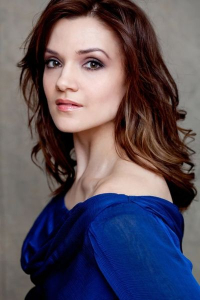 Andriana Chuchman, soprano
Ukrainian-Canadian soprano Andriana Chuchman has earned much acclaim for performances of a wide range of repertoire, including the heroines of Mozart and Handel, 20th Century masterpieces, and the premieres of new operas and orchestral works. This season, she sings Rachmaninoff’s The Bells with both the Kansas City and Cincinnati Symphonies, performs Shostakovich’s Seven Romances on Poems by Alexander Blok with the Chamber Music Society of Lincoln Center at Alice Tully Hall, and brings her highly acclaimed Eurydice in Gluck’s Orphée et Eurydice to Pacific Opera Victoria and Gilda in Verdi’s Rigoletto to Canadian Opera Company. The 26/27 season sees Andriana return to Vancouver Opera as Violetta in Verdi’s La traviata and make her Calgary Opera debut as the titular role of Massenet’s Cendrillon. On the concert stage, she looks forward to engagements featuring Berlioz’ Les nuits d’Été, and Mahler’s Symphony No. 2, among others.
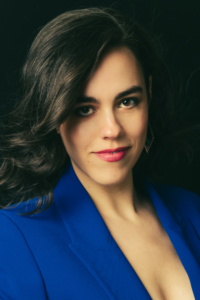
Emma Parkinson, mezzo-soprano
Chinese-Canadian mezzo-soprano Emma Parkinson has performed across Canada and internationally, she has been hailed as “an outstanding voice” (La Scena Musicale). Recently, she was seen as Third Lady in The Magic Flute with Vancouver Opera and as Flora in La Traviata with Opéra de Massy in France. She has also performed roles with Pacific Opera Victoria, Opéra de Montreal, City Opera Vancouver, Burnaby Lyric Opera among others. Emma created the role of Anna in the world premiere of the opera Chinatown in 2022, as well as performing in several Canadian premieres of new operas including Into the Little Hill by George Benjamin in 2023. She has been a soloist with Early Music Vancouver, Vancouver Bach Choir, Saskatoon Symphony Orchestra, Victoria Baroque, Montreal Symphony Orchestra, Alberta Baroque Ensemble, Vancouver Symphony Orchestra and the Orchestre Métropolitain under Yannick Nézet-Séguin.
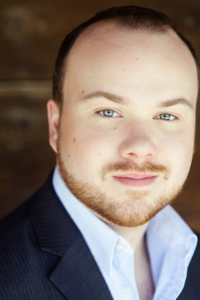
Owen McCausland, tenor
Canadian tenor Owen McCausland is increasingly in international demand for operatic and symphonic engagements. His 23/24 season included a return to the Cleveland Orchestra for Die Zauberflöte, conducted by Franz Welser-Möst, and a debut with Vancouver Opera as Tamino in the same opera. Owen’s season also saw his debut with the Adelaide Festival (Australia) for Stravinsky’s The Nightingale and Other Fables, after debuting the production with the Canadian Opera Company. Highlights of recent seasons include Verdi’s Otello and La fanciulla del west with the Cleveland Orchestra, Mozart’s Don Giovanni and Così fan tutte with Pacific Opera Victoria, Strauss’ Salome with the Canadian Opera Company (COC), and the premiere of Cusson’s Fantasma. Owen has received great acclaim for his performances of Pedrillo in Die Entführung aus dem Serail (COC), Jaquino in Fidelio (Pacific Opera Victoria), and Lensky (Opéra de Montréal).
On the concert stage, Owen joined Orchestre symphonique de Montréal for the World Premiere of Chaakapesh – The Trickster’s Quest under the baton of Kent Nagano at Maison Symphonique, followed by a tour of the Northern Territories and a highly acclaimed documentary. Most recently, Owen premiered Frehner’s L.E.X. with Soundstreams, and performed as tenor soloist in engagements with the Grand Philharmonic Choir, Victoria Symphony, Okanagan Symphony, Symphony New Brunswick, and Toronto Symphony Orchestra.
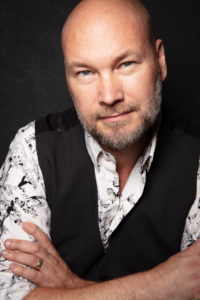
Tyler Duncan, baritone
With a voice described as “honey-coloured and warm, yet robust and commanding” (The Globe and Mail), baritone Tyler Duncan has performed with several leading orchestras including the New York Philharmonic, San Francisco Symphony, Toronto Symphony Orchestra, Minnesota Orchestra, and the Kansas City Symphony.
Recent notable performances include C.P.E. Bach’s Magnificat with the Handel and Haydn Society, Beethoven’s Ninth Symphony with the Vancouver Symphony Orchestra, Bach’s St. John and St. Matthew Passions with the Oregon Bach Festival, and Haydn’s Creation Mass with Music of the Baroque. In the 23/24 season, he collaborated with Early Music Vancouver for Apollo e Dafne; New Jersey Symphony, Grand Rapids Symphony, Edmonton Symphony, and the Calgary Philharmonic for Handel’s Messiah; and the Oratorio Society of New York for their 150th Anniversary celebration concert featuring Beethoven’s Ninth Symphony. He also joined the Amadeus Choir for Haydn’s Creation and debuted the role of Count Almaviva in Pacific Opera Victoria’s Le nozze di Figaro. Future engagements will see Mr. Duncan join The Elora Singers, Vancouver Bach Choir, Newfoundland Symphony Orchestra and the Edmonton Symphony Orchestra.