
Listening Beyond: Kenji Fusé on Music, Meaning, and a Life of Curiosity
by Rebecca Marchand
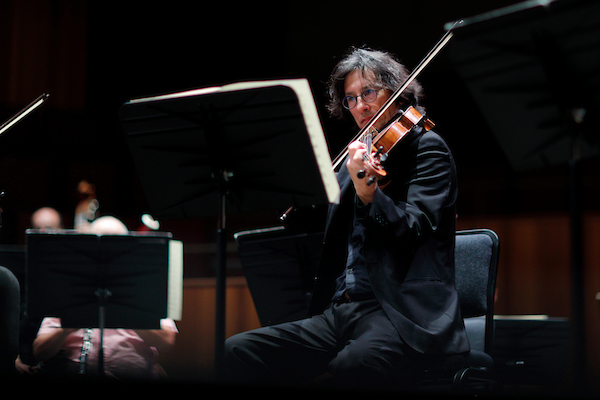
Kenji Fusé, Principal Viola
For Kenji Fusé, music has never been just about playing the right notes at the right time. It is about communication, risk, curiosity, and those rare moments when sound opens a door and invites us to step briefly outside ourselves.
After more than three decades with the Victoria Symphony, Kenji speaks about music the way some people talk about language or nature: as something essential, grounding, and quietly transformative. It is a thread that runs through his life, shaped early on by parents who encouraged exploration, and sustained by those fleeting moments when sound helps us quiet the noise of our thoughts and feel more connected.
“Playing music is when I feel sane,” he admits, “no words, just being.”
An early lesson in curiosity
Kenji’s introduction to music began almost before he can remember. His mother, who studied oboe at university, was influenced by the early Suzuki movement in North America and by teachers who believed music should be something you live with, not something imposed. That approach left a lasting mark.
“She created an atmosphere of music appreciation,” Kenji recalls. “Never demanding but it was always there.”
Music wasn’t the only thing in the background. Kenji spent hours drawing, convinced for many years that he would become a visual artist. Books, ideas, and conversations flowed freely in the Fusé household, encouraged by parents who trusted their children to follow their interests—knowing that passion, once sparked, would find its own form. When his family spent a year in Japan during his childhood, it delayed his return to music—but didn’t diminish his curiosity.
Everything changed around age ten. Back in Canada, Kenji rejoined his peers at school just as he was encountering new orchestral worlds for the first time. Hearing Holst’s The Planets, watching Star Wars, and discovering how music could shape imagination and emotion lit something unmistakable. Soon after came Stravinsky’s The Rite of Spring—a piece that, for Kenji, redefined what music could be.
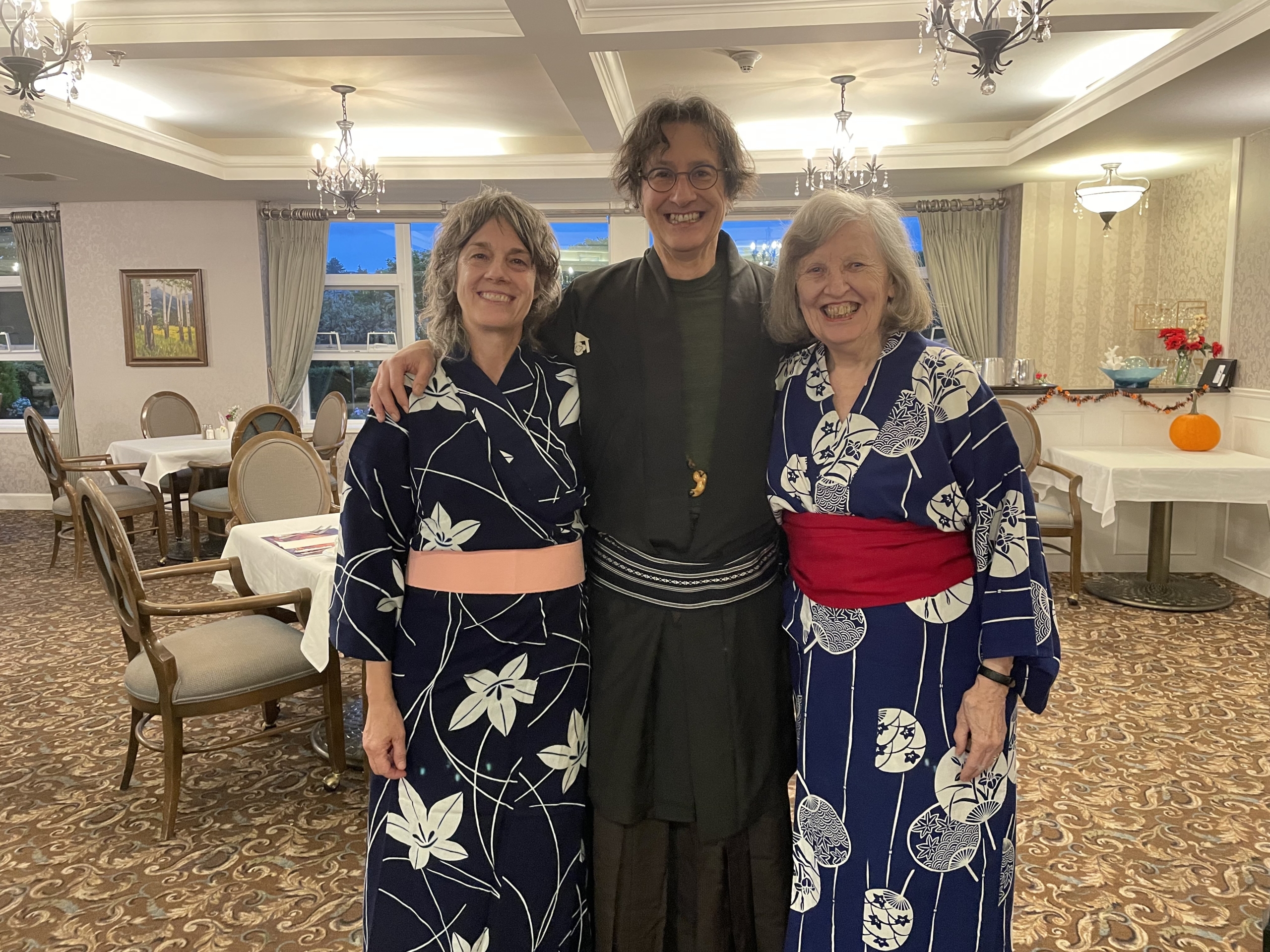
Kenji with partner Astrid (left) and mother Lois (right)
“That was the moment. That piece became the King Kong of music for me,” he says. “I’d never listened to anything so actively.”
While others his age gravitated toward rock and roll or punk music, Kenji was listening to Stravinsky late into the night, score in hand, trying to understand how it was constructed. That hunger—for structure, for colour, for meaning—has never really left him.
He started studying composition, digging into counterpoint and thinking deeply about music not just as sound, but as structure, language, and experience.

Kenji and partner Astrid adventuring on Vancouver Island
Finding his voice and the viola
Kenji entered university as a violinist, but not without challenges. A late starter by conservatory standards, he was encouraged to switch to viola, which initially was a difficult adjustment. “It felt like a demotion at the time,” he admits. But strong mentorship and hard-earned confidence changed that perception.
The viola, with its depth and expressive range, became not just an instrument but a voice to balance his analytical mind with his instinct for colour and communication. Soon after graduation professional opportunities followed—eventually leading him west.
When an opening arose with the Victoria Symphony in the early 1990s, it marked the beginning of a long relationship. Kenji joined the section, and by 1994, became Principal Viola, a role he has shaped with artistry, generosity, and a willingness to take creative risks.
Risk, trust, and VS
Kenji speaks warmly about the culture of the Victoria Symphony, describing it as an orchestra willing to take risks—musically and emotionally.
“What keeps me here,” he says, “is that this orchestra isn’t afraid. We see ourselves as artists and we’re willing to go into that zone where something real can happen, even if it doesn’t always work.”
That willingness to risk vulnerability, he believes, is what moves audiences most. It is also what keeps the work meaningful after decades on stage.
“When musicians really commit, when they trust each other and the audience, something changes in the room,” he shares.
Exploring beyond the music stand
Kenji’s creative life has never been limited to his role on stage. While the realities of the contemporary composition world eventually led him to focus more on performance, the impulse to create never disappeared.
Recently, it has resurfaced in an unexpected way: conducting.
What began decades ago as a teenager “air-conducting” Stravinsky in his bedroom has grown into a new chapter. After encouragement from Maestro Kluxen, colleagues and his partner, Kenji auditioned for—and won—the role of Music Director with the Strathcona Symphony Orchestra in the Comox Valley. Suddenly, a long-held curiosity has become a living, breathing practice.
Conducting has also reopened the door to composition. “Now I have an orchestra I can write for, just like Mahler did,” he says with a laugh. “It’s a whole new world.”
Music + Communication
Kenji often returns to the idea that music is, above all, a form of communication. Technical precision matters, but only insofar as it allows something deeper to pass through. Goosebumps, he says, are a good sign.
“If I play every note perfectly but don’t really let myself go there emotionally,” he says, “it feels like I’ve cheated the audience.”
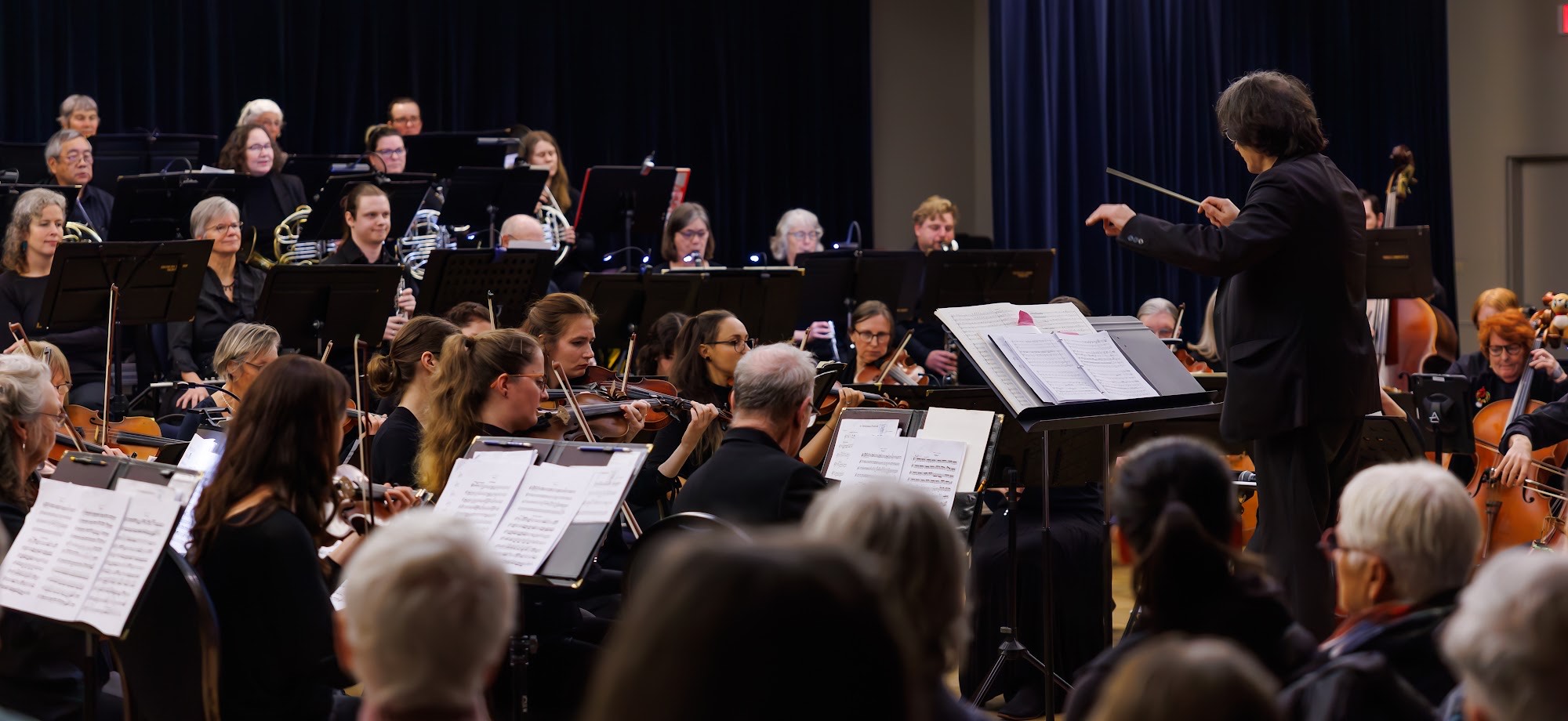
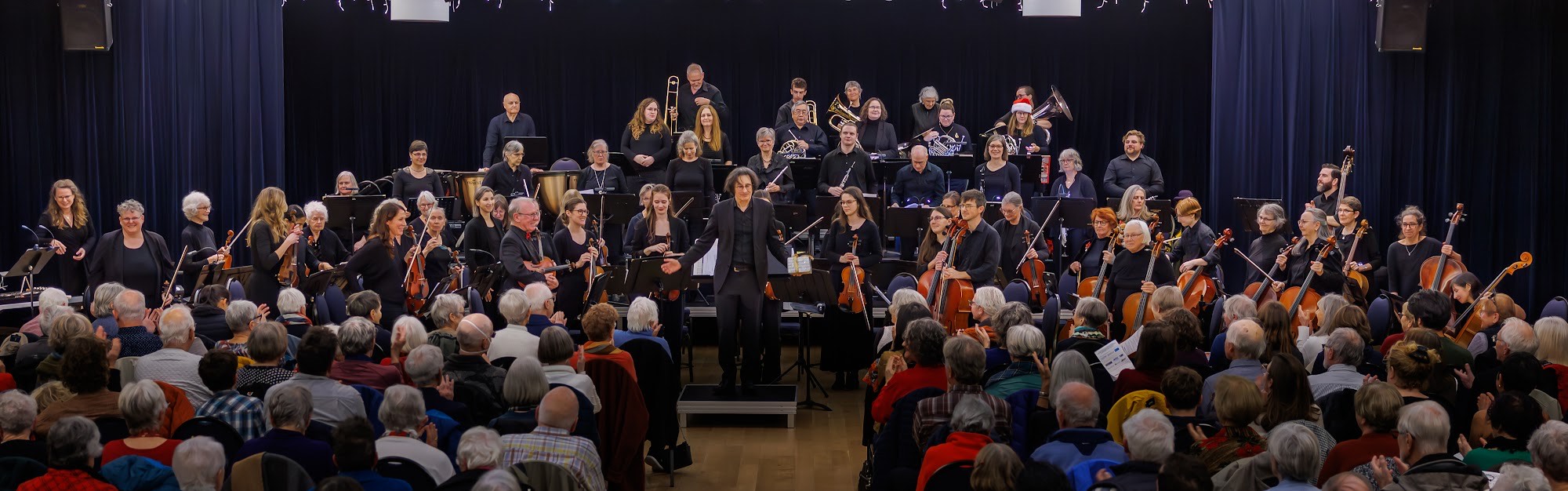
The Strathcona Symphony Orchestra and their new Music Director Kenji
He believes audiences sense this difference immediately. The electricity of a live performance—the shared silence before the first note, the collective breath held in anticipation—is something no recording can replicate. It is also why live orchestral music continues to matter, even in a world saturated with digital perfection.
“There’s something powerful about being together,” he says, “that’s part of why people come, whether they realize it or not.”
For Kenji, the most meaningful performances are those that invite listeners into a state of deep presence. “I hope people leave changed, even just a little,” he says. “That they lose themselves. Not by zoning out, but by listening fully.”
That is the gift Kenji offers every time he steps onto the stage, and one that exists because a community believes it is worth sustaining. “That’s when the magic happens,” he says simply.
Leave a Reply
Want to join the discussion?Feel free to contribute!